Executive judgment
October marks the closest approach yet to the central Democracy Redline danger: the use of concentrated federal power to shape who may vote, how elections are administered, what the public is told about their legitimacy, and what enforcement machinery stands behind those decisions.
No single event completed that transformation during this reporting period. Courts blocked the administration’s attempt to impose new national rules on mail ballots. State and local officials continued to administer elections. News organizations successfully challenged a White House access ban. Military leadership had recently stated that troops would not be sent to polling places or used to seize election materials. Civil society retained the capacity to investigate, litigate and organize.
Those safeguards are the reason the score is 9.8 rather than 10.0. They are also the reason the present danger can be misunderstood. The system is still functioning, but it increasingly functions through emergency resistance. Courts act after disruptive policies are announced. Civic groups sue after federal resources have been mobilized. Election officials prepare for federal intervention while also defending their systems from foreign threats and domestic disinformation. Independent institutions spend more of their capacity resisting political pressure and less performing their ordinary work.
The defining development this month was convergence. Citizenship databases, voter-roll demands, documentary proof rules, federal monitoring, immigration investigations, custodial questioning, publicized prosecutions, government-funded political messaging, press exclusion and weakened civilian election-security capacity moved toward the same political event. Each mechanism has a separate legal framework. Taken together, they create the possibility that election administration, public interpretation and federal enforcement could be aligned under one executive narrative before votes are fully counted.
The report therefore raises the national warning from 9.7 to 9.8. The unrounded weighted score is 9.75. Election Integrity, Institutional Oversight and Weaponized Justice remain at 9.9. Rule of Law and Due Process rise to 9.9. Press Freedom rises to 9.8. Civil Society records the largest movement, from 8.6 to 8.9, after internal records exposed federal scrutiny of more than 150 voter-registration organizations and consideration of undercover operations. Coercive State Power rises to 9.7. Military and Intelligence Neutrality moves to 9.5 as weakened civilian election-security capacity is partly replaced by a more visible defense and intelligence role.
The constitutional margin
A 9.8 score does not mean the November result is predetermined or that every federal action described here is unlawful. It means the remaining distance between severe democratic stress and a full redline event has become dangerously narrow. At this level, intent matters less than usable capacity. A database built for one purpose can be turned toward voter eligibility. A monitoring program can become intimidation if personnel exceed their lawful role. A criminal investigation can become political punishment if selection and publicity follow partisan objectives. A military cyber mission can remain legitimate, but it becomes more consequential when civilian expertise has already been dismantled.
The most dangerous near-term test is whether these powers remain bounded when election results become politically costly. The country has not yet reached the point where federal agents control polling places, election materials are seized, court orders are openly disobeyed, losing candidates are detained, or certification is prevented by force. The period created more pathways to those outcomes while reducing the time available to stop them.
October scorecard
| Category | September | October | Move | October finding |
|---|---|---|---|---|
| Election Integrity and Peaceful Transfer | 9.9 | 9.9 | 0.0 | Federal intervention expanded; courts blocked the most disruptive mail rule. |
| Rule of Law and Court Compliance | 9.8 | 9.9 | +0.1 | Emergency litigation and appointment conflicts made delay and procedure decisive. |
| Habeas Corpus and Due Process | 9.8 | 9.9 | +0.1 | ICE connected custodial intake to election investigations. |
| Coercive State Power and Policing Norms | 9.6 | 9.7 | +0.1 | Surveillance and federal presence reached observers and civic infrastructure. |
| Political Targeting and Weaponized Justice | 9.9 | 9.9 | 0.0 | Election prosecutions and politicized enforcement confirmed an existing ceiling-level risk. |
| Press Freedom and Information Control | 9.7 | 9.8 | +0.1 | The White House excluded major outlets; a court restored access. |
| Civil Society and Associational Freedom | 8.6 | 8.9 | +0.3 | Internal records exposed broad scrutiny and contemplated undercover operations. |
| Institutional Checks and Anti-Corruption | 9.9 | 9.9 | 0.0 | Watchdog capacity weakened further while external oversight remained active. |
| Military and Intelligence Neutrality | 9.4 | 9.5 | +0.1 | Defense cyber forces assumed a more visible election role after civilian capacity cuts. |
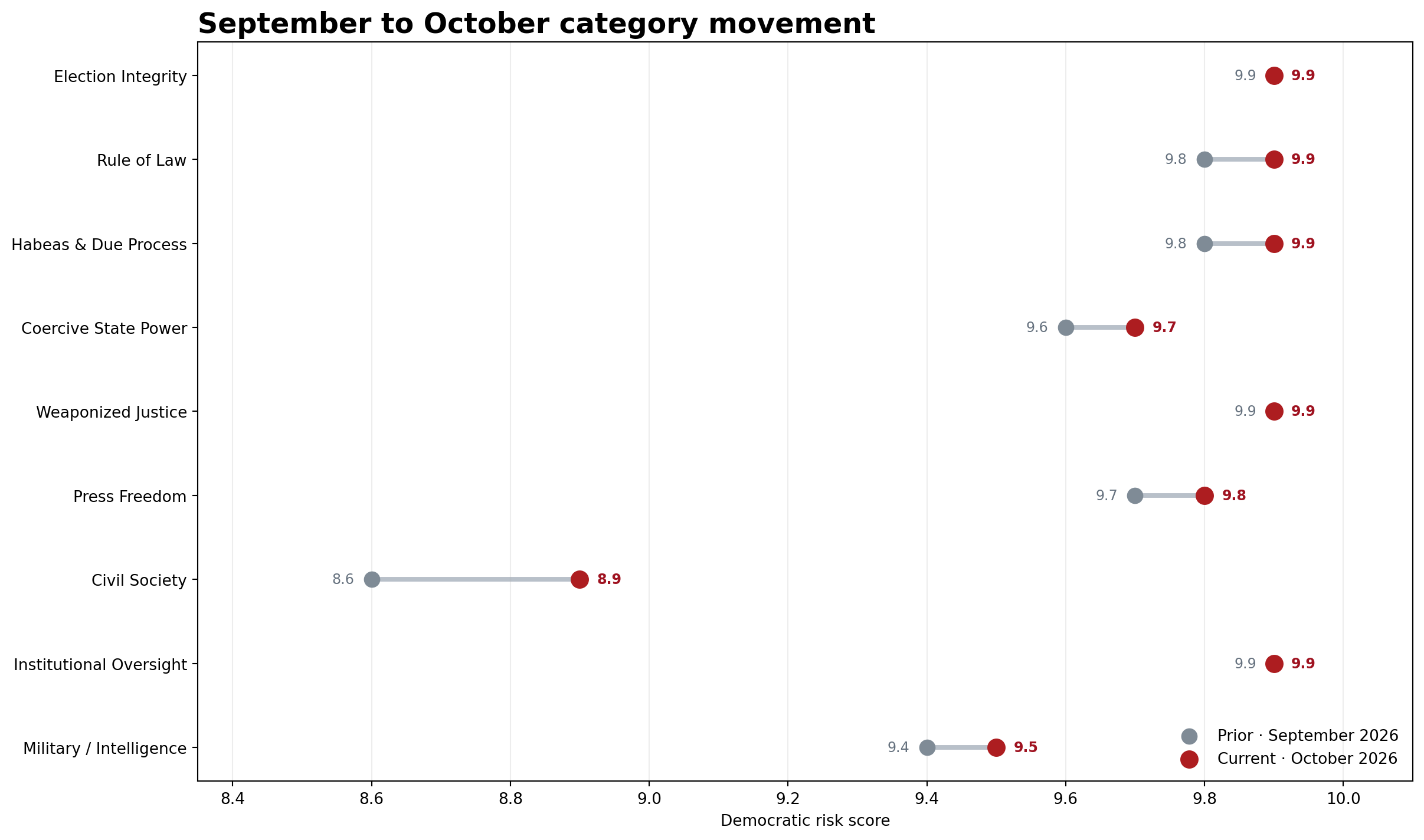
Figure 1 Category movement from September to October 2026
The period in one view
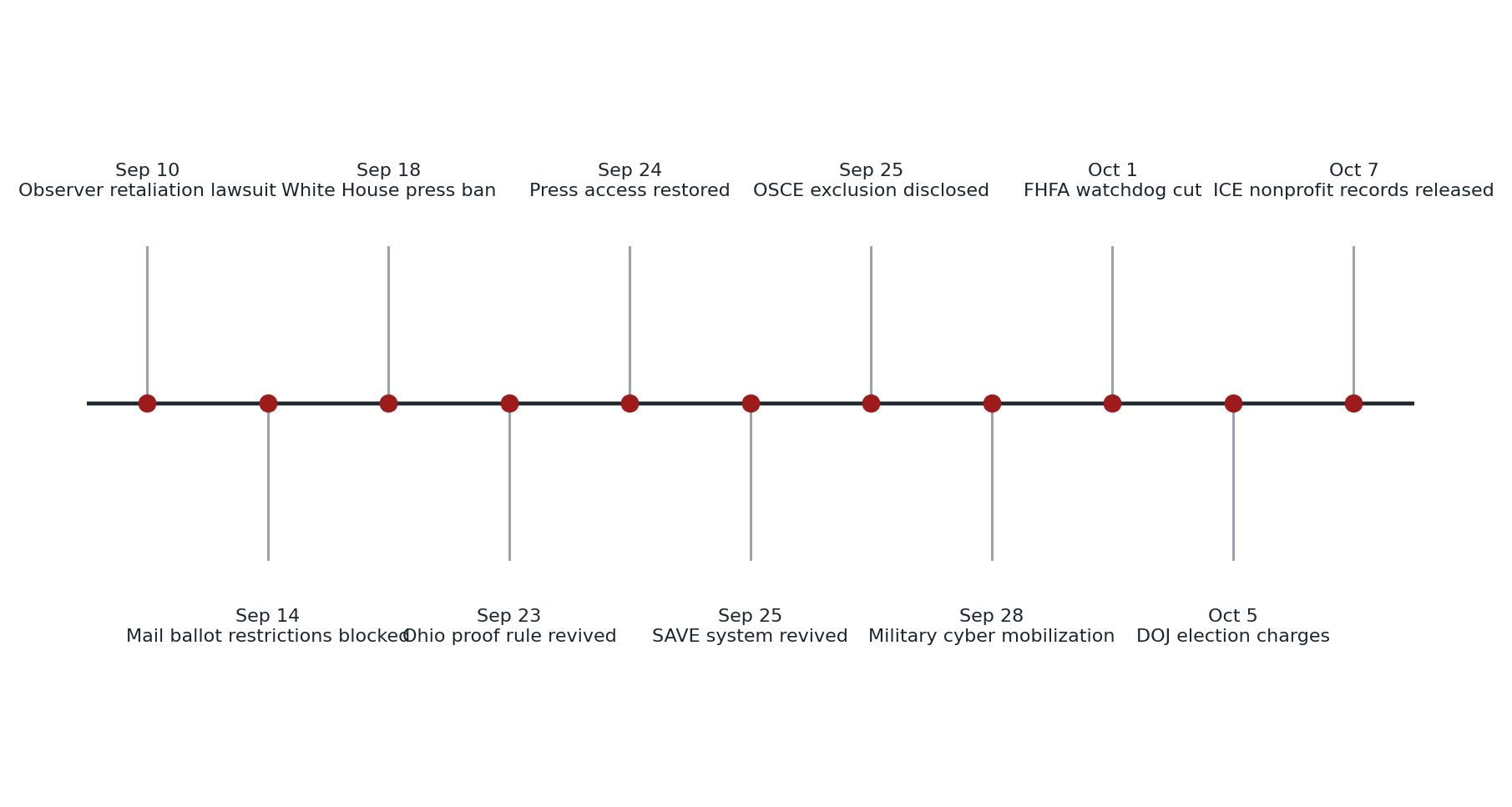
Figure 2 Selected developments during the reporting period
The sequence matters. The administration lost its attempt to impose new mail-ballot rules, but within days other pressure points advanced: documentary proof requirements, renewed access to the SAVE system, removal of international observation, military cyber mobilization and new public election prosecutions. The White House press ban was reversed, yet it demonstrated willingness to impose viewpoint-based access restrictions during an election. Internal ICE records arrived at the end of the period and exposed how far the election-fraud investigation had already reached into civil society.
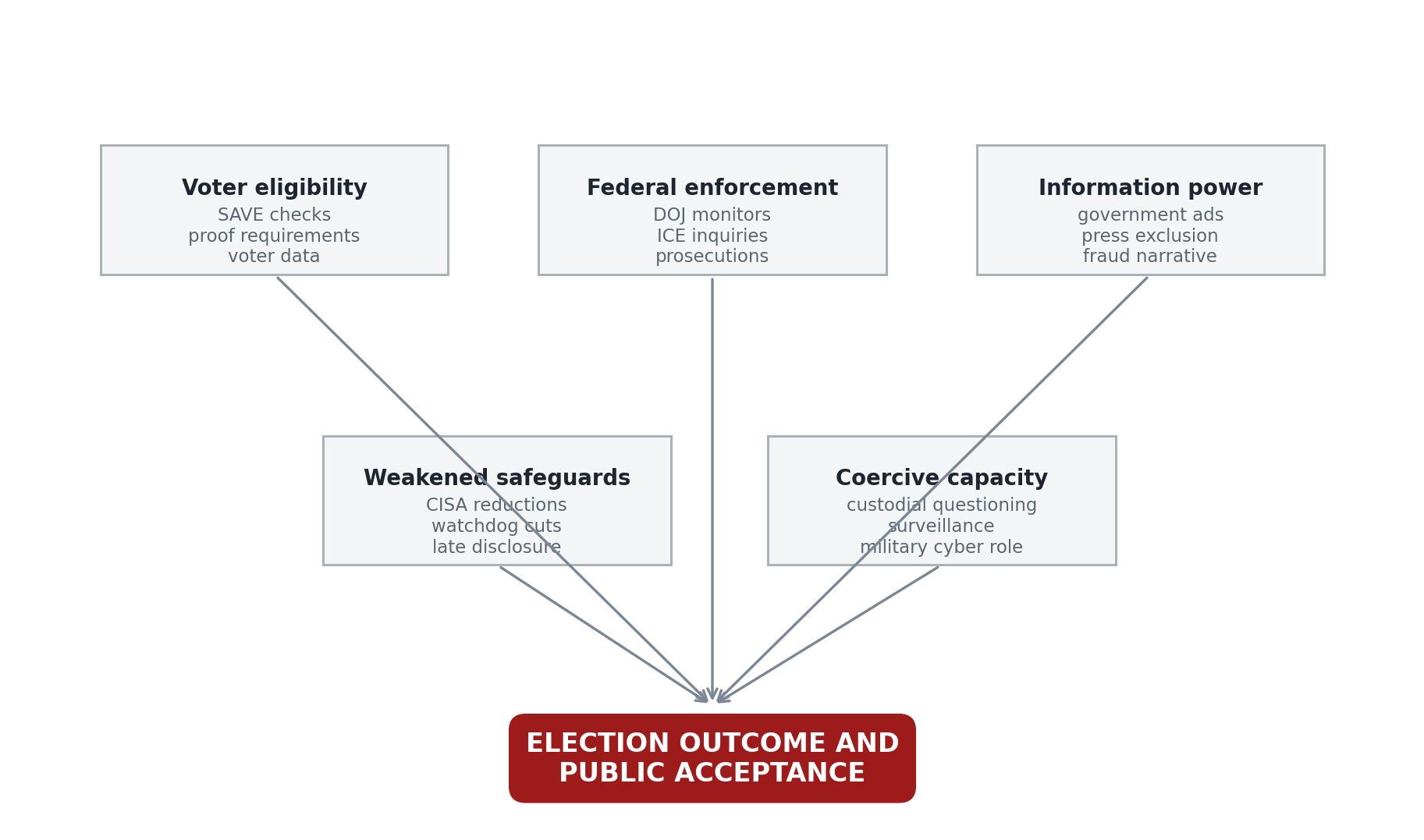
Figure 3 Five channels of federal power converging on election legitimacy
The convergence map is not a claim that every action shares a single secret plan. It shows why the cumulative risk is greater than the sum of isolated controversies. Voter eligibility determines who enters the electorate. Enforcement power determines who is investigated or intimidated. Information power shapes public acceptance. Oversight determines whether misuse is exposed. Coercive capacity determines what happens when political conflict leaves ordinary administrative channels.
1 Election Integrity and Peaceful Transfer
9.9 SEPTEMBER |
9.9 OCTOBER SCORE |
EXTREME RISK HELD AT THE CEILING PERIOD FINDING |
|---|
The election category remained at 9.9 because the federal government continued to press for greater influence over voter eligibility, ballot transmission, poll monitoring and the public interpretation of election administration. The score did not move to 10.0 because courts blocked the most disruptive national mail-ballot changes, states still controlled election operations, and no federal seizure or cancellation of voting occurred.
Mail ballot restrictions blocked before implementation
What happened. On September 14, the Supreme Court declined to lift injunctions against Postal Service rules developed under the president’s election executive order. The rules would have required federal approval of ballot-envelope designs and submission of voter information to a federal portal. Noncompliant election mail could have been refused.
Why it matters. The intervention would have placed a federal operational gate between voters and state election offices after ballots were already being prepared or distributed. Even without evidence of partisan rejection, the implementation timetable created a serious risk that valid ballots would not move through the mail.
Tipping point test. The redline would be crossed if federal agencies refuse to transmit valid ballots, condition delivery on executive demands not authorized by Congress, or selectively apply postal rules to disfavored jurisdictions.
What still held. Federal courts acted before the rules took effect. The Supreme Court left the injunctions in place, and ordinary state mail procedures continued.
Source record: Supreme Court order, September 14; Associated Press, September 15; Campaign Legal Center, September 14. [1–3]
SAVE voter eligibility system restored
What happened. On September 25, the Supreme Court stayed a lower-court injunction and allowed DHS to operate a modified SAVE system while litigation continued. The system combines immigration, citizenship and Social Security data and can respond to state requests concerning voter eligibility.
Why it matters. Large citizenship databases can produce false matches, outdated classifications and confusion between similarly named people. The democratic risk arises when an automated or compressed match becomes the practical basis for removing a citizen without adequate notice and correction.
Tipping point test. The immediate trigger would be systematic removal inside the NVRA quiet period, reliance on unverified database hits as conclusive proof, or denial of a meaningful opportunity to correct an error before voting.
What still held. The order did not direct states to purge voters. The federal government had acknowledged that the NVRA’s 90-day limitation prevented systematic voter-list maintenance before the election. Litigation over privacy and statutory authority continued.
Source record: Department of Homeland Security v. League of Women Voters, Supreme Court order and dissent, September 25; Associated Press and Democracy Forward reporting. [4–6]
Ohio documentary proof requirement revived
What happened. On September 23, the Sixth Circuit lifted a lower-court injunction against an Ohio rule conditioning voter-registration services at motor-vehicle offices on documentary proof of citizenship. Other registration channels continued to accept a signed citizenship attestation.
Why it matters. A documentation rule can burden eligible citizens whose names have changed or whose citizenship records are unavailable at the moment of a motor-vehicle transaction. Its late revival also creates inconsistent procedures across registration channels shortly before the deadline.
Tipping point test. Risk becomes outcome-altering if the state rejects otherwise eligible registrants without usable alternatives, fails to notify affected applicants, or applies documentation requirements selectively.
What still held. Alternative registration forms remained available, and the underlying litigation continued. The rule affected one registration channel rather than imposing a complete statewide documentary requirement.
Source record: Sixth Circuit stay, September 23; Ohio Capital Journal, September 24; district court record. [7–8]
Expanded federal election monitoring
What happened. DOJ prepared to deploy roughly 1,000 federal personnel for the midterms, a substantial expansion over ordinary election-monitoring practice. Civil-rights organizations sought records concerning personnel, authority, training and locations, while some local officials rejected federal access inside polling places during primaries.
Why it matters. Federal observation can protect voting rights when it is civilian, trained and limited to statutory duties. The danger comes from scale, unclear authority and placement within an administration simultaneously promoting unsupported fraud claims and using immigration enforcement to examine voting.
Tipping point test. The trigger would be armed personnel at voting sites, questioning of voters, direction of poll workers, interference with counting, or entry over the objection of lawful state and local officials without a court order.
What still held. Federal law restricts armed deployments at polling places. DOJ monitors do not automatically acquire authority to administer elections, and state law may limit their physical access.
Source record: Brennan Center, September 15; congressional oversight letters; NAACP records litigation; AP, October 2. [9–12]
International observation excluded
What happened. The administration did not invite the OSCE election-observation mission for the first U.S. federal election since the organization began continuous monitoring in 2002. The United States had long participated in reciprocal observation commitments.
Why it matters. Independent observers create a record that is neither controlled by candidates nor limited to domestic partisan institutions. Excluding them removes a source of verification at the moment when official fraud narratives and federal monitoring are both expanding.
Tipping point test. The next danger would be broader exclusion of nonpartisan observers, press or party representatives from polling, counting or certification, leaving only government-selected accounts of contested events.
What still held. Domestic observers, party representatives, courts and civic monitoring programs remained active. Exclusion of OSCE observers did not eliminate all independent oversight.
Source record: Human Rights Watch, September 25; Democracy Docket, September 16. [13–14]
Ordinary error converted into fraud narrative
What happened. After a vendor mailed about 3,126 correct Maricopa County ballots six days early, President Trump called the county dishonest and suggested officials had been caught. County officials and the vendor said the ballots went to the correct voters, remained valid and would not affect the election.
Why it matters. A resilient election system must correct ordinary mistakes without converting them into evidence of conspiracy. Presidential allegations can prime supporters to reject later explanations and can expose local administrators to threats.
Tipping point test. The tipping point comes when unsupported fraud allegations become the stated basis for federal intervention, noncertification, seizure, prosecution or refusal to accept a lawful result.
What still held. The Republican county recorder, vendor and independent reporting supplied a consistent factual explanation, and the ballots remained usable.
Source record: Associated Press, October 6. [15]
Category judgment
Election Integrity remains at 9.9. The period added a serious transparency loss and expanded federal presence, but the mail-ballot ruling demonstrated that courts could still stop an imminent nationwide disruption. A 10.0 would require execution of the feared outcome: federal control of polling or counting, mass invalidation of eligible voters, prevention of certification, seizure of election materials, or refusal to recognize lawful results.
2 Institutional Checks and Anti Corruption
9.9 SEPTEMBER |
9.9 OCTOBER SCORE |
WATCHDOG CAPACITY WEAKENED WHILE OUTSIDE CHECKS REMAINED ACTIVE PERIOD FINDING |
|---|
Institutional Oversight stayed at 9.9. The period produced concrete evidence that internal watchdogs were losing staff, lawful tenure and operational reach. At the same time, GAO, courts, congressional committees and independent inspectors continued to make findings and demand records. That surviving activity prevents a maximum score, but much of it now operates after damage has occurred.
FHFA watchdog budget cut
What happened. On October 1, the Federal Housing Finance Agency reduced its inspector general’s funding to about $20 million, 64 percent below the White House budget request. Watchdog leadership warned Congress that the cut would require eliminating 70 to 80 percent of staff and discontinuing most investigations.
Why it matters. FHFA regulates institutions central to the housing market and possesses sensitive mortgage information. Its director had previously referred perceived presidential adversaries for mortgage-fraud investigations. Disabling the office responsible for examining misuse creates a direct conflict between enforcement power and accountability.
Tipping point test. The institutional redline would be reached if an agency can use sensitive data against political opponents while eliminating any independent capacity to investigate selection, ethics or legality.
What still held. The OIG notified Congress publicly, lawmakers sought a legislative response, and outside reporting preserved the record.
Source record: Reuters, October 1. [16]
Education watchdog vacancy violation
What happened. On September 17, GAO found that leadership arrangements at the Education Department inspector general’s office violated time limits in the Federal Vacancies Reform Act. Mark Priebe had continued leading the office after his authorized acting period ended and was later nominated for the permanent role. Reporting also documented his defense of the president’s mass firing of inspectors general.
Why it matters. An inspector general must be credible when investigating the officials who control the agency. Unlawful acting service, rapid leadership changes and alignment with the president’s removal campaign reduce both independence and staff confidence.
Tipping point test. The tipping point comes when watchdog appointments become loyalty positions, reports are suppressed, investigations are halted for political reasons, or vacancies are used to evade statutory confirmation and tenure rules.
What still held. GAO formally reported the violation to Congress. The nomination remained subject to Senate review, and the leadership arrangement changed.
Source record: GAO B-338093, September 17; White House nomination, September 28; Government Executive, September 30. [17–19]
Government funded presidential advertising
What happened. DHS used approximately $20 million for advertisements featuring President Trump and themes closely resembling campaign material. Members of Congress requested GAO and inspector-general review, and the DNC sued on October 7 alleging unlawful publicity or propaganda. The legal claims had not been adjudicated by the cutoff.
Why it matters. Public money gives incumbents an advantage when government communications promote the officeholder rather than explain a program. The risk is heightened when the advertising runs during early voting and uses funds appropriated for other security purposes.
Tipping point test. A redline event would involve systematic conversion of agency budgets, personnel or data into an incumbent party campaign, especially if oversight findings are ignored or spending continues after a legal determination.
What still held. The spending was disclosed, lawmakers from both parties criticized it, litigation began and future advertising was reportedly slated to shift to political funding.
Source record: Associated Press, October 7; Reuters, October 1; Washington Post, October 1. [20–22]
Civilian election security capacity remains depleted
What happened. CISA issued a 2026 election-security plan on September 24, but election officials said the plan arrived too late to replace capabilities lost after roughly 1,000 employees departed or were removed and real-time election-threat coordination was reduced. States turned to private specialists and interstate cooperation.
Why it matters. Internal oversight includes professional capacity. An agency cannot perform an assigned safeguard if expertise, staff and trusted communication channels are gone, even if it publishes a formal plan.
Tipping point test. The next threshold is a preventable cyber or influence operation that state and local officials cannot analyze because the federal warning network was dismantled, followed by political use of the resulting confusion.
What still held. CISA continued offering voluntary services, and states built substitute partnerships. Defense cyber agencies also retained foreign-threat capabilities, though that shift raises separate neutrality concerns.
Source record: Reuters investigation, September 15; CISA plan, September 24; AP, September 28. [23–25]
Category judgment
The category remains at 9.9 because the pattern is already near its ceiling: executive-aligned personnel and budget decisions can weaken oversight before Congress or courts respond. It does not rise to 10.0 because GAO still publishes adverse findings, inspectors can warn Congress, lawmakers can seek records and courts remain available.
3 Coercive State Power and Policing Norms
9.6 SEPTEMBER |
9.7 OCTOBER SCORE |
FEDERAL INVESTIGATIVE PRESSURE MOVED CLOSER TO LAWFUL POLITICAL ACTIVITY PERIOD FINDING |
|---|
Coercive State Power rises to 9.7. The strongest evidence does not show troops stationed at polling places or a verified post-election National Guard plan. It shows a different form of escalation: federal investigative systems, immigration officers, databases and local enforcement partnerships reaching observers, detainees, registration groups and the election environment.
Retaliation alleged against immigration observers
What happened. On September 10, Common Cause and an individual observer sued DHS, DOJ, FBI and immigration agencies, alleging a policy of intimidating people who lawfully record public enforcement activity. The named observer alleges that agents photographed his face and license plate, his Global Entry status was revoked and state officers threatened arrest if he continued observing.
Why it matters. Recording public officers is a basic accountability practice. When observation produces government dossiers, loss of benefits or threatened arrest, coercion can suppress the evidence needed to challenge future misconduct.
Tipping point test. The trigger would be a documented nationwide policy treating lawful observation as terrorism or obstruction, arrests based on recording alone, or the use of collected data to punish political association.
What still held. The allegations are being tested in court. The plaintiffs retained counsel and access to judicial relief. No final finding had established a nationwide policy by October 7.
Source record: Common Cause v. Mullin complaint, September 10; Campaign Legal Center. [26]
Observer data entered into enforcement systems
What happened. Partially unsealed court records reportedly described ICE personnel collecting photographs and license-plate information concerning observers and placing information into a Palantir investigative system. DHS denied maintaining a systematic protester database and characterized any improper conduct as isolated.
Why it matters. The democratic concern is function creep. Data collected in an immigration operation can follow a citizen across agencies, borders and future encounters even if the underlying activity was lawful.
Tipping point test. The tipping point would be verified political dossiers used to restrict travel, employment, benefits or liberty without individualized evidence of crime.
What still held. The activity is subject to litigation, and the government’s denial creates a factual dispute that courts can examine.
Source record: Wired, October 2; Hilton v. Mullin litigation record. [27–28]
Reduced training amid expanded local immigration enforcement
What happened. Records disclosed during the period showed that ICE had reduced instruction for locally deputized officers from four weeks in person to roughly 40 hours online, removing material on immigrant classifications, removal grounds and practical scenarios. The longer format was later restored after scrutiny. ICE partnerships had expanded to more than 2,600 agencies.
Why it matters. Rapid expansion multiplies the number of officers exercising federal immigration authority. Reduced legal and scenario training increases the likelihood of mistaken arrest, discriminatory stops and inconsistent due process.
Tipping point test. The redline concern becomes acute if inadequately trained local officers are used near voting, protest or civic activity, or if errors produce detention without prompt correction.
What still held. The training was restored after public scrutiny, and use-of-force and civil-rights modules reportedly remained in the shortened course.
Source record: Washington Post, October 6. [29]
Federal monitors and the appearance of enforcement
What happened. DOJ’s planned 1,000-person election deployment overlaps with immigration-focused voter investigations and public fraud messaging. Although monitors are ordinarily civilian lawyers or staff, voters may not distinguish monitors from agents, particularly in communities exposed to immigration enforcement.
Why it matters. Coercion can occur without an explicit threat when government presence reasonably signals scrutiny or possible immigration consequences. Scale and ambiguity therefore matter even if each monitor follows lawful instructions.
Tipping point test. The decisive evidence would be uniforms, weapons, voter questioning, immigration checks, photography, database queries or operational direction of local officials.
What still held. DHS stated it did not plan mass ICE operations at polling places, and federal law sharply restricts armed presence at elections.
Source record: AP, October 2; Brennan Center, September 15; NAACP litigation. [9–12]
Category judgment
The category rises by 0.1 because coercive capacity reached closer to constitutionally protected observation and civic participation. The report does not credit unverified claims of post-election troop deployment. A further move would require actual polling-place enforcement, mass arrests of lawful observers, or operational use of political dossiers.
4 Rule of Law and Court Compliance
9.8 SEPTEMBER |
9.9 OCTOBER SCORE |
LEGAL RESTRAINT WORKED BUT INCREASINGLY DEPENDED ON EMERGENCY INTERVENTION PERIOD FINDING |
|---|
Rule of Law rises to 9.9 because legal procedure itself became an instrument of timing. The administration sought emergency relief for late election changes, delayed disclosure concerning election operations and contested appointment limits for federal prosecutors and watchdogs. Courts still issued enforceable orders, and the administration complied with several major rulings. The category therefore remains short of complete failure.
Emergency docket used for late election policy
What happened. The administration sought emergency relief to implement mail-ballot restrictions and revive the SAVE system immediately before the midterms. The Supreme Court rejected the mail request but granted the SAVE stay.
Why it matters. Emergency review compresses briefing, limits factual development and can determine the rules governing an election without a full merits decision. The danger increases when the executive creates a late policy and then argues that stopping it would cause administrative disruption.
Tipping point test. The redline comes when temporary emergency orders effectively decide election participation or counting while eliminating meaningful time for correction.
What still held. The Court divided the results rather than granting automatic deference. Lower courts developed records, and the mail-ballot restrictions remained blocked.
Source record: Supreme Court orders, September 14 and September 25. [1,4]
Court appointed prosecutor removal rejected
What happened. On October 1, a federal judge ruled that the administration unlawfully removed Roger Rogoff, a court-appointed U.S. attorney in Seattle, and provisionally restored him while rejecting an attempted replacement that had not completed the required appointment process.
Why it matters. Control over U.S. attorneys determines which investigations advance and which disappear. Bypassing statutory appointment procedures can turn temporary vacancies into a route for installing politically preferred prosecutors.
Tipping point test. The tipping point would be systematic disregard of judicial appointments, continued exercise of prosecutorial authority after courts find appointments unlawful, or removal of prosecutors for refusing political cases.
What still held. The court’s order took practical effect, and appellate review remained available.
Source record: Washington Post, October 1. [30]
Delay as practical defeat
What happened. DOJ sought until late October to respond to records requests concerning federal election-monitoring and possible plans involving election systems. Even when a delay is procedurally available, disclosure days before Election Day leaves little time for public review or corrective litigation.
Why it matters. Court authority can remain formally intact while becoming practically useless. Election disputes are unusually time-sensitive because a right vindicated after voting or certification may not restore the lost opportunity.
Tipping point test. The threshold is reached when agencies systematically run out the clock, conceal records required by court order, or comply only after the contested action is irreversible.
What still held. Plaintiffs obtained expedited litigation and courts retained power to shorten deadlines or order production. No final contempt finding was documented during the period.
Source record: NAACP and DNC records litigation filed October 5–7; public docket reporting. [11,31]
Vacancy and appointment limits tested
What happened. GAO’s Education inspector-general finding and the Seattle U.S. attorney dispute show the same structural pressure in different institutions: executive reliance on contested acting or replacement authority to control offices with investigative power.
Why it matters. Appointments rules distribute power among the president, Senate and courts. Treating them as technical obstacles weakens the independence those procedures are designed to protect.
Tipping point test. The redline would be routine exercise of authority by officials already held unlawfully appointed, coupled with refusal to honor remedial orders.
What still held. GAO and federal courts continued to identify violations and provide remedies.
Source record: GAO B-338093; Seattle appointment ruling. [17,30]
Category judgment
Rule of Law reaches 9.9 because the system increasingly depends on rapid, case-specific judicial intervention against executive actions that can produce irreversible consequences. It remains below 10.0 because courts still command compliance in consequential cases, including mail voting, press access and prosecutorial appointments.
5 Political Targeting and Weaponized Justice
9.9 SEPTEMBER |
9.9 OCTOBER SCORE |
SELECTIVE ENFORCEMENT RISK REMAINED AT A CEILING LEVEL PERIOD FINDING |
|---|
Weaponized Justice remains at 9.9. The month added coordinated election-crime publicity, broad nonprofit scrutiny and a continuing effort to align enforcement priorities with the administration’s fraud narrative. The score does not rise because indictments remain subject to ordinary criminal process, at least one federal court dismissed a noncitizen-voting charge, and no evidence showed mass detention of opposition candidates or organizers.
Coordinated election crime announcements
What happened. DOJ announced charges involving 16 noncitizens on October 5, following other election-crime announcements in September. The cases involved alleged illegal voting, fraudulent registration, false citizenship claims and related offenses. DOJ amplified the announcements nationally shortly before voting.
Why it matters. Prosecuting provable election crimes is legitimate. The risk lies in selection, scale of publicity and the use of isolated cases to imply a widespread conspiracy that the department’s own evidence does not establish. Associated Press reporting noted that identified cases were vanishingly rare compared with the number of ballots cast.
Tipping point test. A tipping point would involve charges without individualized evidence, detention or prosecution designed primarily for publicity, unequal treatment based on political identity, or using isolated cases to justify federal control of election administration.
What still held. Defendants retain the presumption of innocence, courts review the charges and Attorney General Todd Blanche acknowledged that the cases were sporadic rather than a connected pattern.
Source record: DOJ, October 5; Associated Press, October 1; Reuters, October 1. [32–34]
Court rejects federal noncitizen voting charge
What happened. On October 1, a federal judge in Miami held the federal noncitizen-voting prohibition unconstitutional as applied in the case before him, concluding that voter qualifications belonged to the states. The government announced an appeal.
Why it matters. The ruling demonstrates that prosecution is still constrained by constitutional adjudication. It also exposes how uncertain legal authority can coexist with a national publicity campaign presenting charges as straightforward proof of a systemic threat.
Tipping point test. The redline would be continued detention or punishment after controlling courts invalidate the legal basis, or executive refusal to recognize dismissal orders.
What still held. The charge was dismissed through ordinary judicial process, and the government pursued appeal rather than openly disregarding the decision.
Source record: Reuters, October 1. [34]
Election offense standards under political pressure
What happened. Senators sought answers concerning removal of DOJ’s election-offenses manual from public access and reductions in career Public Integrity personnel. Those changes occurred while political appointees expanded election investigations and monitor deployments.
Why it matters. Written standards and career review reduce the risk that politically sensitive prosecutions are timed or selected to influence elections. Removing transparency does not prove abuse, but it reduces the public’s ability to test whether normal safeguards remain.
Tipping point test. The threshold would be documented instructions to disregard the department’s election-year noninterference principles, bring cases for political effect, or conceal exculpatory evidence.
What still held. Congressional oversight remained active, and defendants could challenge selective or retaliatory prosecution in court.
Source record: Senators Padilla, Durbin and Whitehouse oversight correspondence; DOJ materials. [35]
Earlier OOC raid gains new significance
What happened. The FBI’s June search of the Ohio Organizing Collaborative remained outside the current period, but October’s ICE records placed that earlier operation within a broader pattern of federal scrutiny directed at voter-registration networks. Agents seized electronic devices in the June search; no public October record established new seizures or formal charges.
Why it matters. A single search can be evaluated on its warrant and evidence. Its democratic meaning changes when later records show that multiple federal components were mapping a large field of civic organizations engaged in turnout work.
Tipping point test. The tipping point would be repeated raids, asset seizures or prosecutions that disable lawful organizing without timely charges or individualized evidence.
What still held. The raid remained subject to legal challenge and public scrutiny. Registration itself remained lawful, and nonprofit networks continued operating.
Source record: Ohio Capital Journal, June 12; Democracy Forward records release, October 7. [36–37]
Category judgment
The category holds at 9.9. The new material confirms the September direction but does not establish the additional fact needed for 10.0: mass or openly political prosecution unbounded by courts, evidence requirements and ordinary defense rights.
6 Military and Intelligence Neutrality
9.4 SEPTEMBER |
9.5 OCTOBER SCORE |
CIVILIAN ELECTION SECURITY WEAKENED AS DEFENSE AGENCIES BECAME MORE VISIBLE PERIOD FINDING |
|---|
Military and Intelligence Neutrality rises to 9.5. The movement is deliberately limited. Military cyber support for elections has precedent and can be necessary against foreign threats. The concern is institutional substitution: defense and intelligence agencies assumed a more public election-security role after the civilian agency built for that mission lost staff, trust and capacity.
Defense cyber forces mobilized
What happened. In a September 22 directive announced on September 28, Defense Secretary Pete Hegseth ordered the NSA, Cyber Command and other military intelligence or cybersecurity resources to mobilize against foreign election interference.
Why it matters. The mission is lawful when it remains external, defensive and coordinated with civilian election officials. It becomes dangerous if classified assessments, military capabilities or intelligence collection are used to support domestic partisan claims or influence counting and certification.
Tipping point test. The tipping point would be direct military contact with voters or election workers, domestic political surveillance, control over voting systems, seizure of election materials or classified claims used to override transparent state processes.
What still held. Military cyber specialists have supported election defense since election systems were designated critical infrastructure. No evidence during the period showed troops or military personnel operating polling or counting sites.
Source record: Associated Press, September 28; Hegseth memorandum dated September 22. [25]
Caine commitment remains an important boundary
What happened. Immediately before the reporting period, Joint Chiefs Chairman Gen. Dan Caine stated in writing that the Joint Force had no plans to send federal troops or federalized National Guard personnel to polling places and no plans to seize ballots, machines or other election materials.
Why it matters. The statement directly addresses feared interference scenarios and is stronger than a general promise of neutrality. Its limitation is temporal: it describes current plans and does not document how leadership would respond to a future presidential order.
Tipping point test. A trigger would be reversal of the commitment, preparation for domestic election operations, refusal to disclose rules of engagement or compliance with an unlawful order.
What still held. The written assurance remains one of the strongest election-specific institutional safeguards in the record.
Source record: Letter to Senator Elissa Slotkin; AP, August 31. [38]
Unverified Guard planning claims excluded
What happened. The research did not substantiate claims that September leaks revealed a plan to deploy National Guard units to counting centers immediately after the midterms. Earlier plans for National Guard quick-reaction forces and longstanding civil-disturbance contingencies exist, but they are not evidence of a specific October election operation.
Why it matters. Evidence discipline is particularly important in this category. Repeating an unsupported military plan could spread the same pre-election fear the report is intended to evaluate.
Tipping point test. Any authenticated order, tasking, force package, staging instruction or rules of engagement tied to election results would immediately change this assessment.
What still held. No verified period evidence showed federalized troops assigned to polls, counts or certification.
Source record: Democracy Redline source review through October 7; Joint Chiefs assurance. [38]
War powers conflict remains unresolved
What happened. On September 15, the House passed another resolution directing an end to unauthorized hostilities with Iran. On September 24, the Senate narrowly rejected a related measure requiring an end to the war or specific congressional authorization.
Why it matters. An extended conflict without specific authorization tests Congress’s constitutional role and the military’s position within lawful civilian control. The House vote showed resistance, but the lack of a binding limitation left operational authority concentrated in the executive.
Tipping point test. The danger grows if military escalation is timed for electoral advantage, Congress is denied material information, or officers are asked to treat partisan political objectives as operational necessity.
What still held. Congress debated and voted publicly. Some members of the president’s party supported limits, and military operations remained subject to appropriations and oversight.
Source record: Associated Press, September 15; Reuters, September 24. [39–40]
Category judgment
The category moves to 9.5 because defense and intelligence institutions now occupy more of the election-security space vacated by CISA. The move remains small because cyber defense is a traditional mission, Gen. Caine’s written boundary held and no election-specific troop deployment was documented.
7 Press Freedom and Information Control
9.7 SEPTEMBER |
9.8 OCTOBER SCORE |
DIRECT VIEWPOINT BASED EXCLUSION WAS ATTEMPTED AND REVERSED PERIOD FINDING |
|---|
Press Freedom rises to 9.8. The strongest event was direct and documented: the White House withdrew access from three major news organizations after the president criticized their coverage. A federal judge restored access within days. This is both a serious deterioration and a clear example of a safeguard working.
White House access withdrawn from major outlets
What happened. On September 18, the White House revoked access for CNN, MS NOW and Politico. President Trump said the organizations should not be able to report what he characterized as lies and negativity. The administration later invoked national security.
Why it matters. Access decisions can be neutral when based on space, safety or conduct. Punishing named outlets because of editorial viewpoint allows the government to shape the pool of reporters covering the president during an election.
Tipping point test. The tipping point would be a durable system excluding critical outlets across agencies, enforcement against journalists who continue reporting, or government control over which facts may be reported from election operations.
What still held. On September 24, a federal judge found the ban likely violated the First Amendment and due process, rejected the unsupported national-security rationale and ordered access restored. The administration complied.
Source record: Reuters, September 24. [41]
Government advertising enters the information environment
What happened. The DHS-funded advertisements promoted President Trump using themes similar to campaign communications while early voting was underway. Critics alleged illegal propaganda, while the administration described the material as patriotic or educational.
Why it matters. Information control does not require banning speech. It can also arise when the government uses public funds and official authority to saturate the information environment with incumbent political messaging.
Tipping point test. The trigger would be compulsory carriage, regulatory retaliation against outlets declining the ads, systematic diversion of agency budgets or government labeling of opposing reporting as unlawful disinformation.
What still held. The ads were publicly attributed to the government, challenged in court and subjected to congressional and watchdog scrutiny. No evidence showed compulsory carriage.
Source record: Associated Press and Reuters, October 1–7. [20–22]
FCC political robocall petition remains a watch item
What happened. The FCC opened public comment on a request to relax restrictions on political robocalls, including calls using artificial or prerecorded voices. The comment period extended beyond the report cutoff and no waiver had been granted.
Why it matters. AI-generated political calls can impersonate officials, spread false voting information and scale intimidation. The event matters as a pending regulatory choice, not an accomplished policy change.
Tipping point test. A score-moving event would be approval without strong disclosure and anti-impersonation safeguards, particularly if the change takes effect before the election.
What still held. The petition remained open for public comment, and an FCC commissioner publicly opposed the change.
Source record: Associated Press, October 7. [42]
Category judgment
The category rises to 9.8 because the White House imposed a viewpoint-linked penalty on named news organizations. The rapid court order prevented the restriction from becoming durable. Claims that journalists were broadly barred from counting centers, that platforms were directed to suppress contrary reports or that emergency communications blackouts were planned are excluded for lack of sufficient evidence.
8 Civil Society and Associational Freedom
8.6 SEPTEMBER |
8.9 OCTOBER SCORE |
FEDERAL SCRUTINY REACHED VOTER REGISTRATION NETWORKS AT NATIONAL SCALE PERIOD FINDING |
|---|
Civil Society records the largest monthly movement, rising from 8.6 to 8.9. October 7 records showed that federal immigration investigators had reviewed or screened more than 150 nonprofit and civic organizations connected to voter registration. The documents also described consideration of undercover techniques and aggregation of massive voter datasets. The evidence does not establish that undercover agents were deployed or that every listed organization was a formal investigative target.
More than 150 organizations reviewed
What happened. Records obtained through litigation showed HSI reviewing or screening organizations in multiple states in connection with suspected noncitizen registration. Some reviews reportedly found no derogatory information. Organizations connected through partnerships, including networks associated with Voto Latino, appeared in the material, but the record does not establish that every named partner was formally investigated.
Why it matters. Mapping a civic sector before an election can chill lawful work even without prosecution. Small organizations may not know whether a federal inquiry is preliminary, criminal or linked to immigration enforcement, and they may lack resources to respond.
Tipping point test. The tipping point would be subpoenas, raids, asset seizures, arrests or loss of nonprofit status directed at lawful registration work without individualized evidence of crime.
What still held. The documents became public, civil-society groups obtained counsel and no nationwide prohibition on registration activity was imposed. Some internal reviews found no adverse information.
Source record: Democracy Forward records release, October 7; New York Times reporting and syndicated record analysis. [37,43]
Undercover activity considered
What happened. HSI documents discussed possible use of undercover personnel to develop investigations concerning registration organizations and alleged facilitation networks. Available evidence showed consideration or proposal, not confirmed deployment.
Why it matters. Undercover immigration operations carry a greater chilling effect than ordinary records review because participants may reasonably fear that volunteers, attendees or partners are government agents gathering evidence for prosecution or removal.
Tipping point test. The threshold would be execution of covert operations against lawful political association, manufactured violations, disruption of organizations without charges or use of immigration status to recruit informants.
What still held. No confirmed infiltration was established by the cutoff. Courts, records litigation and public reporting increased the chance that any deployment would be detected.
Source record: Democracy Forward, October 7; Democracy Docket, October 7. [37,44]
Mass voter data combined with immigration systems
What happened. The records described tens of millions of voter-related records obtained or analyzed through DOJ, USCIS and outside sources. Some information may have entered an ICE investigative platform associated with immigration targeting.
Why it matters. The concern is the combination of datasets and purposes. Voter records gathered for election administration can acquire enforcement consequences when linked to immigration systems, particularly where matching errors are difficult for individuals to discover or correct.
Tipping point test. The tipping point would be adverse immigration, criminal or voting action based on automated matches without notice and individualized verification.
What still held. The release allows technical and legal scrutiny. The documents did not establish that every record produced an investigative file or adverse action.
Source record: Democracy Forward, October 7. [37]
Chilling effect must be measured carefully
What happened. Nonprofit VOTE warned that conspicuous enforcement actions could create hesitation but explicitly urged organizations not to abandon lawful activity. Separate reporting documented funding shortages and staffing reductions among voter-engagement groups, driven largely by donor retreat rather than proven government coercion.
Why it matters. The distinction protects the report’s credibility. A credible threat can exist before broad operational collapse, but causation should not be assigned without evidence from affected organizations.
Tipping point test. Future score movement should rely on documented cancellations, staff departures, donor decisions tied to retaliation fears, lost banking or insurance, or organizations suspending lawful programs because of enforcement pressure.
What still held. National networks continued publishing legal guidance, coordinating protection efforts and conducting voter engagement.
Source record: Nonprofit VOTE, June 29; Associated Press, October 2026. [45–46]
Category judgment
Civil Society rises to 8.9 because the October records transformed a set of isolated enforcement controversies into evidence of a national investigative field. The score remains below the other categories because organizations still operate, litigate, publish and organize. A move into the 9s would require demonstrated operational suppression, executed infiltration, broad financial exclusion or prosecution of lawful association.
9 Habeas Corpus and Due Process
9.8 SEPTEMBER |
9.9 OCTOBER SCORE |
ELECTION ENFORCEMENT ENTERED THE CUSTODIAL PROCESS PERIOD FINDING |
|---|
Habeas Corpus and Due Process rises to 9.9. The decisive new event was ICE’s integration of voting questions into the booking process for people already under arrest or detention. That setting connects election enforcement to liberty, prosecution exposure and possible removal consequences in a way that voter-roll analysis alone does not.
ICE detainees questioned about voting
What happened. ICE added a question about unlawful voting to its booking intake system in late August. An October 1 instruction required officers to ask people who acknowledged voting whether the vote was cast by mail or in person. Hundreds of immigration officers had been reassigned to search for possible voter fraud.
Why it matters. A person in custody may not understand whether an intake answer is voluntary, whether counsel is available or whether the response will be used in criminal or removal proceedings. Language, competency and fear of continued detention can affect the reliability of any admission.
Tipping point test. The tipping point would be denial of counsel, punishment for silence, use of unreliable admissions to extend detention, or coordinated extraction of election narratives from detainees for political publicity.
What still held. No public evidence established that the questions automatically changed bond or detention decisions. Criminal cases remain subject to evidentiary and constitutional review.
Source record: Washington Post, October 6. [47]
Compressed citizenship review
What happened. A whistleblower disclosure reported that agents could receive approximately 12 minutes to determine whether a person flagged through voter data was actually a citizen. Officials emphasized the need for investigation before arrest, while reporting showed that large initial suspect totals often fell sharply after verification.
Why it matters. Citizenship status can be legally and factually complex. Compressed review increases the chance that a name match, outdated immigration record or missing document becomes a government conclusion before the individual receives notice.
Tipping point test. The redline would be arrest, removal, voter cancellation or criminal referral based on an unverified match without timely notice and correction.
What still held. Public scrutiny, state verification and prosecution standards reduced some false-positive totals. The administration’s own investigations continued to show that noncitizen voting was rare.
Source record: Associated Press, October 1; congressional whistleblower disclosure. [33]
Prolonged detention allegations continue
What happened. On October 7, at least 73 detainees at the Folkston ICE Processing Center in Georgia reportedly began a hunger strike protesting detention lasting as long as several years without criminal charges, deficient conditions and lack of individualized review. Organizers also alleged that a lead participant was placed in solitary confinement. ICE and the private operator had not responded to the specific allegations by publication.
Why it matters. The category measures whether confinement remains subject to meaningful and timely legal review. Multi-year civil detention and alleged retaliation for collective protest approach the core habeas concern even without an election connection.
Tipping point test. The threshold would be categorical denial of hearings, inability to access courts or counsel, retaliatory isolation for legal advocacy, or continued confinement after courts order release.
What still held. The claims were publicly reported and could be challenged through habeas and conditions litigation. They remained allegations rather than adjudicated findings at the cutoff.
Source record: Guardian, October 7. [48]
Voter eligibility measures remain cross category evidence
What happened. SAVE screening and Ohio’s documentation rule can deprive eligible citizens of political rights, but they belong principally in Election Integrity. Their due-process significance depends on notice, the accuracy of the government record and the availability of prompt correction.
Why it matters. Keeping category boundaries clear prevents double counting. The same event can illuminate multiple risks without receiving full independent weight in every score.
Tipping point test. The due-process trigger would be actual removal or registration denial without notice and a usable remedy before the election.
What still held. The NVRA quiet period, alternative registration methods and ongoing litigation remained available constraints.
Source record: Supreme Court and Ohio litigation records. [4,7–8]
Category judgment
The category rises to 9.9 because election investigation became part of custodial immigration processing while prolonged detention remained an established national problem. It does not reach 10.0 because courts remain available, ordinary criminal rights still apply and no evidence showed preventive detention of candidates, journalists, lawful voters or opposition leaders as a class.
Why this period is a tipping point
Democratic breakdown rarely arrives as one unmistakable order. It becomes possible when separate authorities can be activated toward the same political objective. October’s danger lies in the number of mechanisms now positioned around the midterms and the short time between a disputed event and an irreversible outcome.
The five stage escalation pathway
Create doubt before voting. Ordinary errors, isolated illegal votes and unresolved allegations are presented as evidence that the election system is broadly compromised.
Build federal information advantage. Voter data, immigration records, criminal inquiries and classified threat reporting give the executive branch a larger pool of claims than state election officials can independently audit in real time.
Place federal personnel near the process. Monitors, investigators or security personnel gain proximity to polling, counting or election administrators, even if their initial role is observational.
Use delay and emergency procedure. Records arrive too late, courts receive compressed applications and temporary decisions determine what can happen before full review.
Convert uncertainty into authority. A declared fraud, security or public-order emergency becomes the asserted basis for intervention in counting, certification, protest or acceptance of results.
The country moved through portions of the first four stages during this period. It did not complete the fifth. That distinction is the remaining constitutional margin.
Observable redline triggers
| Safeguard | Trigger event |
|---|---|
| Election administration | Federal agents direct poll workers, handle ballots, occupy counting sites or prevent certification. |
| Voter eligibility | Eligible citizens are removed or denied registration at scale through unverified citizenship matching without timely remedy. |
| Court authority | Executive officials openly refuse election-related orders or delay until relief cannot restore the right. |
| Political justice | Candidates, organizers, journalists or election officials are detained or prosecuted without individualized evidence for conduct integral to lawful participation. |
| Information control | Independent press and observers are excluded from counting or government communications become the only permitted account. |
| Military neutrality | Troops or military intelligence are used in domestic election administration, seizure, political surveillance or certification. |
| Civil society | Registration, monitoring or protest organizations are infiltrated, financially disabled or criminalized for lawful activity. |
What still prevents a maximum score
State and local officials still administer voting, counting and certification.
Courts blocked the national mail-ballot rule and restored access to excluded news organizations.
The administration complied with several consequential judicial orders during the period.
Military leadership stated that troops would not be sent to polling places or used to seize election materials.
Civil-society organizations retained counsel, operational capacity and access to public records and courts.
Criminal defendants retained ordinary process, and judges remained willing to dismiss charges.
Independent journalism continued to expose internal records, policy changes and conflicts of interest.
These safeguards are not minor qualifications. They are the functioning parts of constitutional democracy. The warning is that more of the system now depends on them acting rapidly, simultaneously and successfully against pressure generated by the same executive branch.
What to watch before and after Election Day
The final list, legal authority, training and conduct rules for DOJ monitors.
Any deployment of ICE, FBI, armed federal officers, National Guard or military personnel near polling or counting locations.
State use of SAVE results after the NVRA quiet period began, including notice and correction procedures.
New voter-registration investigations, subpoenas, raids or undercover operations.
Federal requests for ballots, machines, tabulator data or custody of election records.
Instructions governing NSA, Cyber Command and intelligence reporting about domestic election events.
Restrictions on press, party observers, nonpartisan monitors or public access to counting.
Attempts by local boards to delay certification or demand access beyond their statutory role.
Public statements declaring fraud or emergency before evidence has been investigated.
Whether courts receive prompt compliance when orders affect counting, certification or protest rights.
Methodological note
Democracy Redline scores observable institutional stress from 0 to 10. Election Integrity receives 20 percent of the index; Rule of Law receives 15 percent; Due Process, Coercive State Power, Weaponized Justice, Press Freedom, Civil Society and Institutional Checks each receive 10 percent; Military and Intelligence Neutrality receives 5 percent. The October category scores produce an unrounded weighted result of 9.75, published as 9.8.
The index separates fact, interpretation and score impact. A reported allegation may be important without being treated as proven. A government rationale may be legitimate without eliminating democratic risk. A court ruling can both document serious deterioration and serve as a countervailing safeguard. Events appearing in more than one category are not automatically given full weight twice.
This report excludes rumor, unsupported claims and events outside the September 7 through October 7 reporting period unless they are clearly identified as foundational context. In particular, it does not treat proposed undercover activity as executed, database review as proof of illegal voting, criminal charges as convictions, or feared troop deployments as documented plans.
Selected source record
Supreme Court of the United States. Order concerning proposed mail-ballot restrictions. September 14, 2026.
Associated Press. Supreme Court rejects Trump mail-ballot restrictions ahead of midterms. September 15, 2026. https://apnews.com/article/trump-mail-voting-executive-order-lawsuit-78a4fbeb48d9c5fd27d1c865529fc65f
Campaign Legal Center. Court blocks USPS rule before the midterms. September 14, 2026. https://campaignlegal.org/update/victory-trump-appointed-federal-judge-blocks-illegal-usps-rule-midterms
Supreme Court of the United States. Department of Homeland Security v. League of Women Voters, No. 26A308. September 25, 2026. https://www.supremecourt.gov/opinions/25pdf/26a308_pok0.pdf
Associated Press. Supreme Court lets administration use revamped voter eligibility database. September 2026. https://apnews.com/article/412e12f5a492dd20e407812f30f7c139
Democracy Forward. Analysis of Supreme Court SAVE decision. September 26, 2026. https://democracyforward.org/blog/what-you-need-to-know-about-the-supreme-courts-decision-on-voter-purge-system/
Ohio Capital Journal. Circuit court allows Ohio BMV proof-of-citizenship requirement. September 24, 2026. https://ohiocapitaljournal.com/2026/09/24/circuit-court-allows-ohio-bmv-to-require-proof-of-citizenship-for-voter-registration/
U.S. District Court record concerning Ohio House Bill 54. August 25, 2026. https://www.courthousenews.com/wp-content/uploads/2026/08/judge-freezes-Ohio-proof-of-citizenship-requirement.pdf
Brennan Center for Justice. Roles and Rules for Federal Election Monitor Programs. September 15, 2026. https://www.brennancenter.org/our-work/research-reports/roles-and-rules-federal-election-monitor-programs
Representative Raja Krishnamoorthi. Oversight correspondence concerning DOJ election monitors. September 2026.
Democracy Docket. DOJ sued for records on 1,000-monitor deployment. October 5, 2026. https://www.democracydocket.com/news-alerts/doj-sued-for-records-on-unprecedented-plan-to-deploy-1000-election-monitors-in-midterms/
Associated Press. Administration says no mass ICE deployment at polls. October 2, 2026. https://apnews.com/article/e43c1758ccd446eb441957b36f9e281f
Human Rights Watch. Trump Administration Rejects External Election Observers. September 25, 2026. https://www.hrw.org/news/2026/09/25/us-trump-administration-rejects-external-election-observers
Democracy Docket. Administration did not invite OSCE observers. September 16, 2026.
Associated Press. Trump criticizes Maricopa County over early-ballot mailing error. October 6, 2026. https://apnews.com/article/fcbd40f8b0c0b778f50409bc994d4225
Reuters. U.S. housing-agency watchdog warns budget cut will stymie work. October 1, 2026. https://www.reuters.com/legal/government/us-housing-agency-internal-watchdog-warns-budget-cut-will-stymie-its-work-2026-10-01/
Government Accountability Office. B-338093, Education Inspector General Vacancies Act violation. September 17, 2026. https://www.gao.gov/products/b-338093
White House. Nominations Sent to the Senate. September 28, 2026.
Government Executive. Education inspector-general leadership changes. September 30, 2026.
Associated Press. DNC sues over taxpayer-funded presidential advertisements. October 7, 2026. https://apnews.com/article/a1e286d37989f1cb5bbe13905f8fbbf1
Reuters. Lawmakers seek investigation of government advertisements featuring Trump. October 1, 2026.
Washington Post. Campaign-style advertisements use DHS funds. October 1, 2026.
Reuters. Election officials prepare for federal disruption and cyber gaps. September 15, 2026. https://www.reuters.com/investigations/election-officials-prepare-chaos-trump-seeks-tilt-midterms-republicans-2026-09-15/
CISA. 2026 Election Infrastructure Security Plan. September 24, 2026. https://www.cisa.gov/resources-tools/resources/2026-election-infrastructure-security-plan
Associated Press. Hegseth mobilizes military cyber forces for midterms. September 28, 2026. https://apnews.com/article/nsa-hegseth-trump-midterms-election-security-2bfc1417d397db5fda4ad672c0b35ee2
Campaign Legal Center. Common Cause v. Mullin complaint and case materials. September 10, 2026. https://campaignlegal.org/cases-actions/challenging-trump-administrations-unlawful-intimidation-and-retaliation-against
Wired. ICE placed observer photographs in a Palantir database. October 2, 2026.
Protect Democracy. Hilton v. Mullin case materials. September 9, 2026.
Washington Post. ICE reduced training for deputized local officers. October 6, 2026.
Washington Post. Judge rules removal of Seattle court-appointed U.S. attorney unlawful. October 1, 2026.
NAACP and DNC public-records litigation concerning federal election operations. October 5–7, 2026.
U.S. Department of Justice. Charges involving 16 individuals for election crimes. October 5, 2026. https://www.justice.gov/opa/pr/justice-department-announces-charges-involving-16-aliens-election-crimes
Associated Press. Administration campaign demonstrates rarity of noncitizen voting. October 1, 2026. https://apnews.com/article/09b8391612fc87676267a254c55eaee8
Reuters. Federal judge finds noncitizen-voting statute unconstitutional. October 1, 2026. https://www.reuters.com/world/us-judge-finds-law-criminalizing-noncitizen-voting-unconstitutional-2026-10-01/
Senators Padilla, Durbin and Whitehouse. Oversight correspondence concerning federal election prosecutions. 2026.
Ohio Capital Journal. FBI searches Ohio Organizing Collaborative offices. June 12, 2026. https://ohiocapitaljournal.com/2026/06/12/fbi-searches-offices-of-ohio-voting-rights-group/
Democracy Forward. Records concerning ICE voter-registration investigations. October 7, 2026. https://democracyforward.org/news/press-releases/democracy-forward-obtains-groundbreaking-records-detailing-ices-attempts-to-silence-voters/
Letter from Gen. Dan Caine concerning military participation in the midterms; Associated Press, August 31, 2026.
Associated Press. House votes to end unauthorized Iran war. September 15, 2026. https://apnews.com/article/iran-war-powers-resolution-8519dae8197214b4edf2192e174c82f4
Reuters. Senate rejects Iran war-powers resolution. September 24, 2026.
Reuters. Judge blocks White House ban on CNN, MS NOW and Politico. September 24, 2026. https://www.reuters.com/world/judge-lifts-trumps-white-house-ban-cnn-ms-now-politico-2026-09-24/
Associated Press. FCC considers political and AI robocall waiver. October 7, 2026. https://apnews.com/article/b97fb6e8d06704dc043556dba25de548
New York Times reporting on federal review of voter-registration organizations, October 7, 2026.
Democracy Docket. ICE probed voter-registration groups and considered undercover work. October 7, 2026. https://www.democracydocket.com/news-alerts/ice-probed-hundreds-of-voter-registration-groups-across-the-u-s/
Nonprofit VOTE. Response to Ohio Organizing Collaborative raid and legal resources. June 29, 2026. https://www.nonprofitvote.org/nonprofit-vote-response-to-ooc-raid-resources/
Associated Press. Voter-engagement groups report funding and staffing shortfalls. October 2026.
Washington Post. ICE asks detainees about unlawful voting. October 6, 2026. https://www.washingtonpost.com/immigration/2026/10/06/run-up-election-ice-is-asking-detainees-if-they-voted-illegally/
Guardian. Detainees at Georgia ICE facility begin hunger strike. October 7, 2026. https://www.theguardian.com/us-news/2026/oct/07/ice-detention-facility-georgia
Democracy Redline. Methodology Version 1.2. https://democracyredline.com/methodology
Democracy Redline. September 2026 Formal Report. https://democracyredline.com/reports/september-2026
Publication note
This report records information available through October 7, 2026. Later developments should be evaluated in the next reporting period unless a material correction is required. Scores remain editorial judgments under the published Democracy Redline methodology. Readers may challenge the evidence, interpretation or category movement through the project’s established corrections process.